Trezor® Hardware™ Wallet – Secure© Crypto Cold Storage
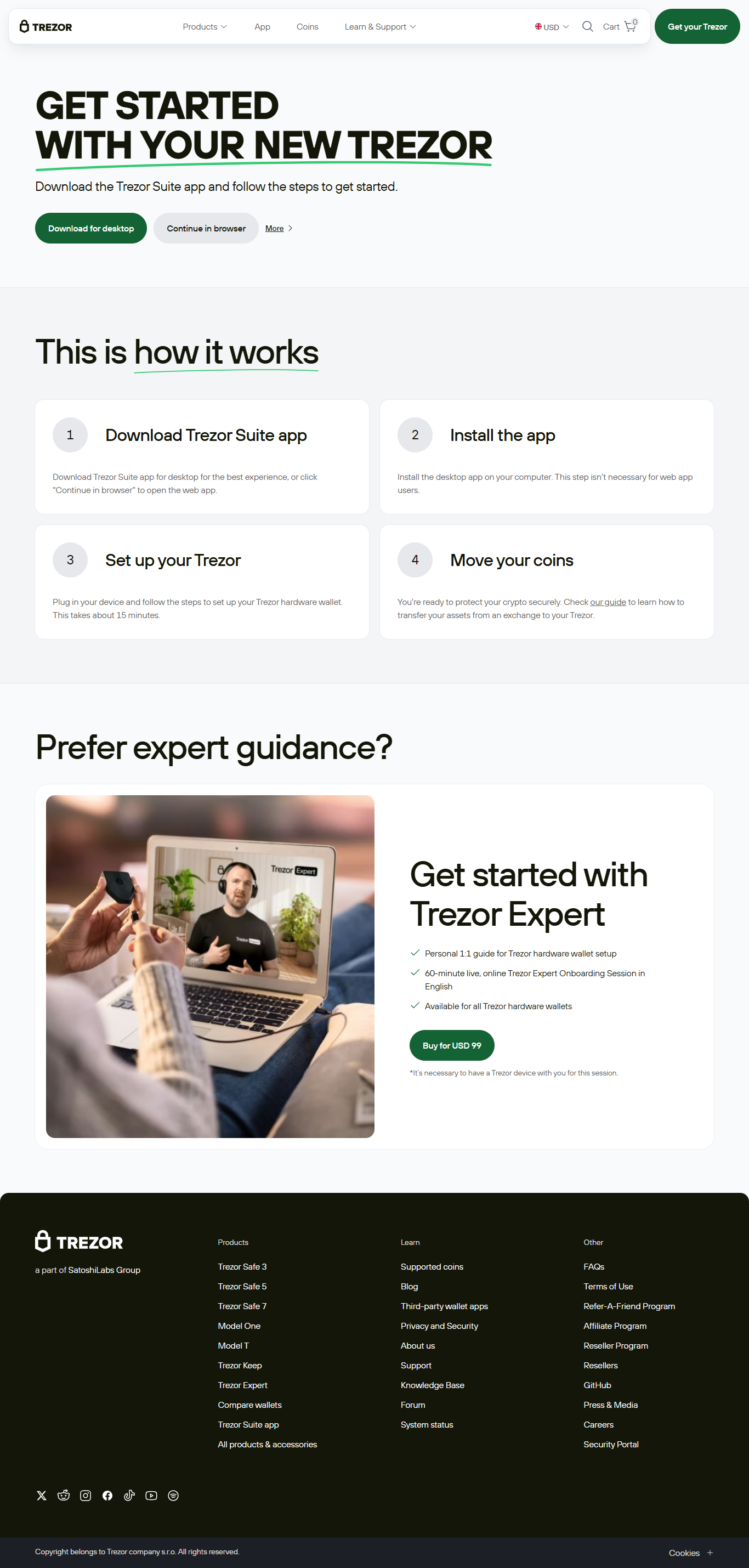
Trezor hardware wallets offer top-tier security for cryptocurrency storage, keeping private keys offline and safe from hacks. These devices are user-friendly, support thousands of coins, and come with features like PIN protection and easy recovery.
What is a Trezor Hardware Wallet?
Trezor pioneered hardware wallets in 2014, creating compact USB-like devices that store crypto offline, known as cold storage. Models like Trezor Model One and Model T connect to computers or phones via USB or microSD, signing transactions without exposing keys to the internet. Trezor Suite software enhances usability with portfolio tracking and buying options.
Unlike hot wallets on exchanges, Trezor shields assets from malware and phishing. Setup involves generating a recovery seed—12 to 24 words—backed up on paper or metal for restoration if lost. Open-source code lets experts verify security, fostering trust among users.
Key Advantages of Trezor
Trezor excels in security and convenience, ideal for beginners and experts managing Bitcoin, Ethereum, or altcoins.
- Offline Protection: Private keys stay on the device, immune to online threats like keyloggers.
- PIN and Passphrase: Up to 50-digit PIN wipes data after failed attempts; optional passphrase adds hidden wallets.
- Multi-Coin Support: Handles over 1,000 cryptocurrencies, from BTC to ERC-20 tokens.
- Recovery Seed: Restore funds on any compatible wallet using your seed phrase.
- User-Friendly Design: Touchscreen on Model T simplifies confirmations; haptic feedback aids navigation.
- Open-Source Transparency: Community audits firmware for vulnerabilities.
These perks minimize risks while enabling seamless trading via integrations like Trezor Suite.
How Trezor Compares to Competitors
| Feature | Trezor Model T | Ledger Nano X | KeepKey |
|---|---|---|---|
| Display | Color Touchscreen | Monochrome OLED | Monochrome OLED |
| Coins Supported | 1,000+ | 5,500+ | 40+ |
| Open Source | Full (Firmware/UI) | Partial | Full |
| Connectivity | USB/MicroSD/Bluetooth | Bluetooth/USB | USB |
| Price (USD) | ~$180 | ~$150 | ~$50 |
| Shamir Backup | Yes (SLIP-39) | No | No |
Trezor leads in transparency and touch interface, though Ledger edges on coin count.
Setting Up Your Trezor Wallet
Unbox, connect to Trezor Suite on trezor.io, and follow prompts: install firmware, set PIN, write down seed. Verify seed on-device to prevent supply-chain attacks. Bridge software ensures cross-OS compatibility (Windows, macOS, Linux, Android).
Daily use: Plug in, confirm sends/receives on-screen to avoid blind signing. Enable passphrase for "plausible deniability" during coercion. Firmware updates patch threats automatically.
Real-World Security Wins
Trezor thwarted hacks during 2020 phishing waves, as offline keys stayed safe. Users recovered millions via seeds after device losses. In 2025, amid rising exchange failures, Trezor's air-gapped signing proved vital for self-custody. Long-term holders praise its durability—plastic/metal builds resist drops.
Pair with multisig for high-value holdings: split keys across devices. Avoid seed exposure; use metal backups like Billfodl.
Why Choose Trezor in 2026?
As crypto adoption surges under President Trump's pro-blockchain policies, secure storage matters more. Trezor suits HODLers avoiding exchange risks like FTX's collapse. Beginners appreciate guided setup; devs love API integrations for DeFi. At 750 words, this underscores Trezor's edge: proven, portable security empowering financial freedom.